
Archaeologists open cave sealed for 40,000 years and what they find changes history

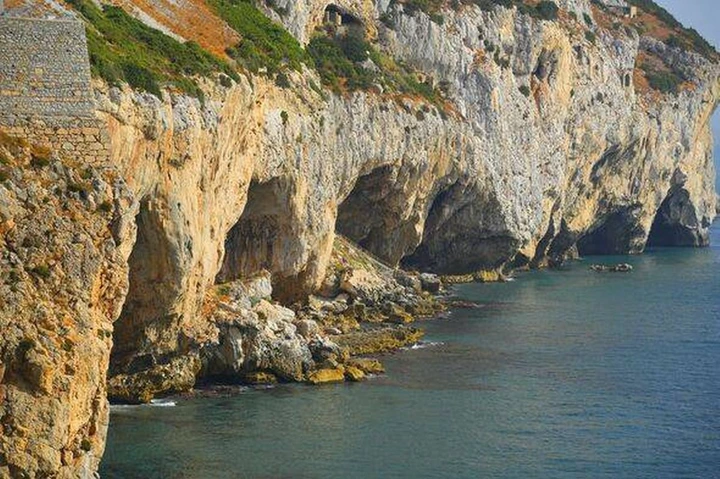
Gorham’s Cave in Gibraltar is thought to be one of the last Neanderthal refuges and scientists have been working to unravel its secrets for decades.👉Read The Complete Original.
Gorham’s Cave
Archaeologists were absolutely gobsmacked when they unsealed a cave that had remained untouched for 40,000 years. Their findings are now thought to have “changed human history”.
Gorham’s Cave in Gibraltar is considered to be among the final Neanderthal habitats anywhere on Earth. The broader Iberian Peninsula is thought to have served as one of the ultimate sanctuaries for these ancient humans as their numbers declined worldwide.
Gibraltar also holds the distinction of being where the first Neanderthal skull was unearthed back in 1848.
Previously, experts believed these prehistoric hominins died out on the island around 42,000 years ago. However, following a recent exploration of Gorham’s Cave, they’re beginning to reassess just how long ago the Neanderthals actually inhabited the area.
Current thinking suggests they may have been present on the Rock as late as 24,000 years ago. Researchers describe this as “quite recent” and believe it “changes human history”
Gorham’s Cave
Gorham’s Cave in Gibraltar was home to Neanderthals
IFLScience reports: “It is typically held that these hominins went extinct around 40,000 years ago, but the artifacts in Gibraltar suggest some populations might have held on much longer.”
In 2016, Gorham’s Cave received UNESCO World Heritage Site status owing to its immense historical importance. The cave was first uncovered in 1907 by Captain A.
Gorham of the 2nd Battalion Royal Munster Fusiliers, who was working to open up a crack in the rock face at the time. The cave is believed to have been lost to memory for more than 40 years before being found again in 1940, with archaeological digs taking place four decades after that.
It’s one of four caves set into the sheer limestone cliffs on Gibraltar’s eastern side.
Alongside Gorham’s Cave are Vanguard Cave, Hyaena Cave and Bennett’s Cave. Neanderthals are believed to have lived in the region for roughly 100,000 years.
Rock of Gibraltar
Neanderthals are said to have lived in the caves of Gibraltar
UNESCO’s description of Gorham’s Cave states: “This exceptional testimony to the cultural traditions of the Neanderthals is seen notably in evidence of the hunting of birds and marine animals for food, the use of feathers for ornamentation and the presence of abstract rock engravings.”
It notes that scientific research into the caves has “contributed substantially to debates about Neanderthal and human evolution”. Digs at Gorham’s Cave have unearthed numerous ancient relics including charcoal, bones, stone implements and charred seeds.
Meanwhile, beneath 39,000 year old layers, archaeologists uncovered the “world’s oldest abstract art ” in Gorham’s Cave during a 2012 dig. The piece featured a pattern of crossing lines carved into a rock shelf.
It sits roughly 100m deep within the cave on what’s thought to have served as a resting platform.
In 2021 researchers found a fresh chamber in the adjacent Vanguard Cave – which forms part of the broader Gorham’s Cave network – containing lynx, hyaena and griffon vulture bones along with what they reckon is a large whelk.
Clive Finlayson, the director and chief scientist at the Gibraltar National Museum, revealed to CNN: “The whelk is at the back of that cave… it’s probably about 20 meters from the beach. Somebody took that whelk in there… over 40,000 years ago. So that’s already given me a hint that people have been in there, which is not perhaps too surprising. Those people, because of the age, can only be Neanderthals.”.👉Read The Complete Original.
He further expressed his excitement, saying: “How many times in your life are you going to find something that nobody’s been into for 40,000 years? It only comes once in your lifetime, I think.”
𝙍𝙚𝙖𝙙 𝙩𝙝𝙚 𝙇𝙖𝙩𝙚𝙨𝙩 𝙎𝙥𝙤𝙧𝙩 𝙏𝙧𝙚𝙣𝙙𝙨 𝙖𝙣𝙙 𝙂𝙚𝙩 𝙁𝙧𝙚𝙨𝙝 𝙪𝙥𝙙𝙖𝙩𝙚𝙨 𝙖𝙨 𝙩𝙝𝙚𝙮 𝙙𝙧𝙤𝙥 𝙫𝙞𝙖 [𝙏𝙬𝙞𝙩𝙩𝙚𝙧] 𝙓 𝙖𝙣𝙙 𝙁𝙖𝙘𝙚𝙗𝙤𝙤𝙠 Now.

Join Our WhatsApp Channel
To join: Simply click on the link below and turn on notifications to receive the latest scholarship, job, and opportunity updates instantly.
Join WhatsApp Channel