

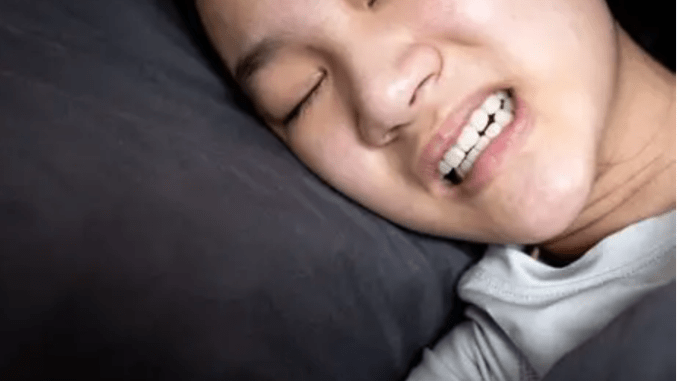
How do you sleep at night? I don’t mean morally – I mean physically. Does your body soften and relax into a gentle slumber? Or do you, like roughly 8% of the adult population, spend your nightly repose gritting your teeth like an NFL coach whose team is behind in overtime?
Even if you do, you might not know. Teeth grinding, also known as bruxism, occurs both during the day (awake bruxism) and at night (sleep bruxism). Sleep bruxism is generally harder to detect because, well, we’re asleep.
“People are usually unaware of the condition,” says Dr Subha Giri, a dental sleep medicine expert at the Mayo Clinic. Instead, she says, night-time teeth grinders may be alerted “by caregivers or bed partners who hear grating, tapping or clicking sounds”.
Below, what you need to know about sleep bruxism and how to manage it.Read Original/Read Complete.