
Every Woman Could Avoid Infertility By Taking Note Of The 4 Causes, Risks Factors & Prevention.

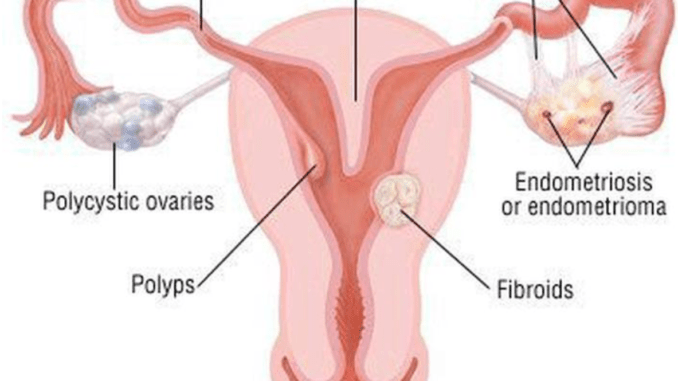
Infertility prevents women from conceiving and having children. This is common information after a year of trying to conceive as a heterosexual couple (but may be diagnosed sooner depending on other factors). One-third of heterosexual infertility cases are caused by male relationship troubles, one-third by female partner issues, and one-third by a mix of variables or unknown causes.
When the female spouse causes infertility, it’s called “female factor” infertility.
Symptoms and Roots
What causes female infertility?
. “Unexplained” or “multifactorial” infertility is difficult to diagnose (multiple causes, often both male and female factors). Possible causes of infertility in women include:
1. Uterine health issues
Uterine polyps, fibroids, adhesions, and septum are treated. Unlike polyps and fibroids, septums are present from birth. Adhesions may form after dilatation and curettage (D&C).
2. Fallopian tube restrictions
Chlamydia and gonorrhea induce pelvic inflammatory disease, the most prevalent “tubal factor” infertility cause.
3. Ovulation blockers
Many disorders can prevent women from ovulating regularly. Hormonal imbalances, thyroid issues, severe stress, pituitary tumors, food disorders, and substance addiction can affect ovulation.
4. Egg quality/quantity issues:
. Some eggs have too few chromosomes to be fertilized or develop into a healthy child. “Balanced translocation” can harm every egg. As women age, some of these become more common.
Female infertility: who is more likely?
Several reasons can cause female infertility. Health, genetics, lifestyle, and age can cause infertility in women. Examples:
– (Age) (Age) (Age)
– ( serious Hormonal issue that delays ovulation) ( severe Hormonal problem that delays ovulation) (severe hormonal problem preventing ovulation)
abnormal menstrual cycle (an Abnormal menstrual cycle)
ʼ (Obesity)
« (when you are underweight)
– (a low body-fat content from excessive activity is a risk factor) (a low body-fat content from excessive activity is a risk factor) Extreme activity lowers body fat (a risk factor).
Endotriosis (Endometriosis)
– (a Structural issues with the fallopian tubes, uterus or ovaries) (a Structural abnormalities with the fallopian tubes, uterus or ovaries) Fallopian tube, uterine, or ovarian structural issues
Uterine fibroids (Uterine fibroids)
Cysts (Cysts)
Tumors (Tumors)
Thyroid disorders and autoimmune diseases like lupus, rheumatoid arthritis, and Hashimoto’s.
. (STIs).
Polycystic ovary syndrome (PCOS).
(POI) (POI).
(Drug abuse) (heavy drinking).
Smoking (Smoking)
. Nonetheless, DES usage during pregnancy may cause infertility in some kids.
Previous ectopic (tubal) pregnancy
Female infertility treatment—how?
Following diagnosing female infertility, your doctor will provide several treatment options. Treatment should target the medical problem causing infertility. Hormone medications treat various disorders, whereas surgery fixes structural issues. Both therapies are medical interventions (ovulation issues, thyroid conditions).
Many will need artificial insemination or in vitro fertilization (injecting cleansed sperm into the uterus after ovulation) (fertilizing eggs with sperm in the lab to make embryos, then transferring the embryo into the uterus).
Infertile women can have children through adoption or gestational surrogacy.
Can women avoid infertility?
Female infertility is rarely preventable. Yet, infertility can be prevented by addressing risk factors. It’s like this. Reducing alcohol and smoking, maintaining a healthy weight, and exercising regularly can boost fertility.