
Gulf Nations Demand Permanent Destruction of Iran’s Missile and Drone Arsenal Amid Rising Tensions

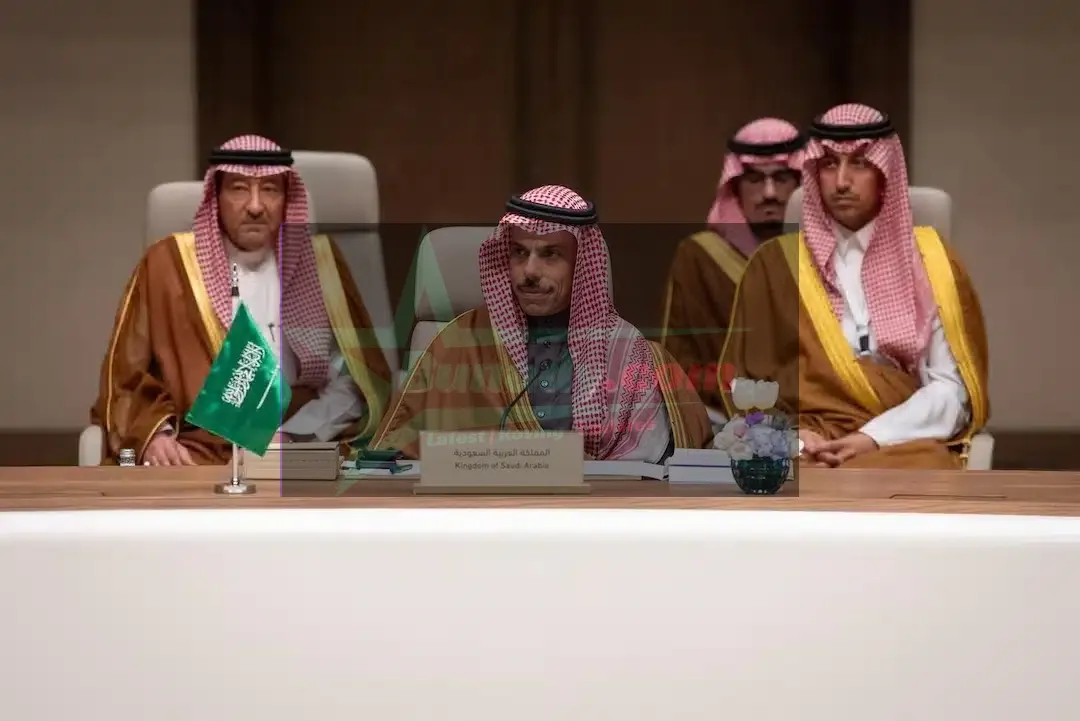
Gulf Arab states have informed the United States that any diplomatic settlement with the Iranians must permanently weaken Iran’s missile and drone capabilities while ensuring global energy supplies never become weapons of war.
Officials from the United Arab Emirates, Saudi Arabia and Bahrain argue that simply ending hostilities will not resolve regional security threats. These nations want enforceable restrictions embedded in any agreement to prevent future aggression.
Naija News gathered that Gulf policymakers now prioritise shaping the post-conflict regional order rather than focusing solely on when the fighting stops.
The conflict has severely affected Gulf economies, which are heavily dependent on energy exports and international travel. Disruptions in the strait have pushed energy prices higher, rattled supply chains globally and accelerated inflation.
UAE Ambassador Calls For Comprehensive Solution
UAE Ambassador to the United States Yousef al-Otaiba framed the conflict as a critical test of whether Iran can continue threatening the global economy.
“A simple ceasefire isn’t enough. We need a conclusive outcome that addresses Iran’s full range of threats: nuclear capabilities, missiles, drones, terror proxies and blockades of international sea lanes,” Otaiba stated.
According to reports, Gulf officials met privately with the United States and reported that Iran’s repeated attacks have eliminated any diplomatic off-ramp. Iran has fired on Gulf states multiple times during the ongoing American-Israeli military conflict.
US President, Donald Trump, extended his deadline for Iran to reopen the Strait of Hormuz until April 7, threatening the destruction of Iranian energy plants if it refuses.
Trump has indicated that negotiations with Iran proceed positively. However, an Iranian official characterised Washington’s proposal as one-sided and unfair, demanding closure of American bases in the Gulf as a settlement precondition.
Officials Cite Previous Nuclear Deal Failures
Also, Ebtessam Al-Kerbi, president of the Emirates Policy Centre, emphasised that preventing future conflicts matters more than stopping the current one.
“The real challenge is not persuading Iran to stop the war, but ensuring the Gulf is not left exposed to the same dynamics that made it possible in the first place,” Al-Kerbi explained.
Gulf states point to their experience with the 2015 nuclear agreement as justification for their demands. That deal capped Iran’s nuclear enrichment but allowed the Iranians to maintain regional threats through missiles, drones and proxy warfare.
Trump withdrew the United States from the 2015 Iran nuclear deal in 2018, describing the agreement as defective and one-sided.
American intelligence assessments show that the United States has destroyed approximately one-third of Iran’s missile stockpile, but it has not stopped the barrage of missiles and drones from being fired at the Gulf States. Gulf officials insist this military degradation must continue to guarantee lasting security.
Gulf States Present Unified Security Demands
Abdulaziz Sager, chairman of the Saudi-based Gulf Research Centre, stated that Gulf nations now explicitly require any Iran settlement to directly guarantee their security.
“The United States protects its interests, and Israel’s. Now it is our turn to protect and defend ours,” Sager declared.
The Gulf Cooperation Council, representing Bahrain, Kuwait, Saudi Arabia, Qatar, Oman and the UAE, has signalled unified resistance to any settlement sidelining Gulf security requirements.
Secretary-General Jasem Al-Budaiwi highlighted that Iran has launched 5,000 missile and drone attacks targeting Gulf energy facilities, civilian infrastructure and maritime traffic. He stated Iran has crossed all acceptable limits.
Al-Budaiwi emphasised that Gulf states exercised restraint to avoid wider war but will not accept becoming targets again. He clarified that while diplomatic solutions remain preferred, every state retains the right of self-defence.
Qatar, Oman and Kuwait advocate privately for rapid conflict resolution, fearing economic fallout and potential retaliation. The UAE, Saudi Arabia and Bahrain maintain they can withstand further escalation and reject any post-war scenario allowing Iran to weaponise the Strait of Hormuz.
Iran Tensions Shape Gulf Strategic Alignment
Furthermore, UAE presidential adviser Anwar Gargash, noted that Iranian attacks on Gulf states have produced profound geopolitical consequences, cementing Iran as the central threat driving Gulf strategic calculations.
“This is the cost of Iran’s misguided calculations,” Gargash remarked.
He added that these attacks will deepen the UAE’s security alignment with the United States, demonstrating how Iran’s actions have backfired strategically.
𝙍𝙚𝙖𝙙 𝙩𝙝𝙚 𝙇𝙖𝙩𝙚𝙨𝙩 𝙎𝙥𝙤𝙧𝙩 𝙏𝙧𝙚𝙣𝙙𝙨 𝙖𝙣𝙙 𝙂𝙚𝙩 𝙁𝙧𝙚𝙨𝙝 𝙪𝙥𝙙𝙖𝙩𝙚𝙨 𝙖𝙨 𝙩𝙝𝙚𝙮 𝙙𝙧𝙤𝙥 𝙫𝙞𝙖 [𝙏𝙬𝙞𝙩𝙩𝙚𝙧] 𝙓 𝙖𝙣𝙙 𝙁𝙖𝙘𝙚𝙗𝙤𝙤𝙠 Now.

Join Our WhatsApp Channel
To join: Simply click on the link below and turn on notifications to receive the latest scholarship, job, and opportunity updates instantly.
Join WhatsApp Channel