

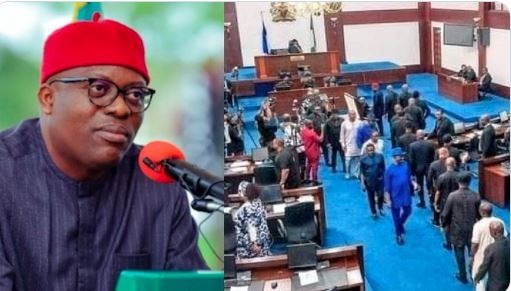
The Chief Judge of Rivers State, Justice Simeon Amadi, has explained why he declined to set up a seven-member panel to investigate Governor Siminalayi Fubara and his deputy, Prof. Ngozi Nma Odu, amid ongoing impeachment proceedings.
In a letter addressed to the Speaker of the Rivers State House of Assembly, Rt. Hon. Martin Amaewhule, Amadi cited court orders as the reason for his decision, urging lawmakers and other parties to respect the rule of law.
The Assembly had, on January 16, requested the Chief Judge to constitute a panel to probe alleged gross misconduct by the Governor and his deputy, invoking Section 188 of the Nigerian Constitution. This move followed the commencement of impeachment proceedings against the duo.
However, both Fubara and Odu had separately approached the Oyibo branch of the State High Court in Port Harcourt, obtaining interim injunctions restraining the Chief Judge from receiving, considering, or acting on any request or resolution from the Assembly regarding the panel.
Justice Amadi, in his letter dated January 20, confirmed receipt of both the Assembly’s request and the court orders. He said:
Justice Simeon Amadi
“My office is also in receipt of two separate court orders of interim injunction issued on 16th January, 2026 in two suits… restraining the 32nd Defendant, i.e., the Hon. Chief Judge of Rivers State, from receiving, forwarding, considering or howsoever acting on any request, resolution, articles of impeachment or other documents from the Assembly for the purpose of constituting a panel to investigate the purported allegations of misconduct.”
The Chief Judge emphasized the importance of constitutionalism and compliance with the rule of law, noting that the lawmakers had appealed the interim orders. He explained that under the doctrine of lis pendens, all parties must await the outcome of the appeals before any action is taken.
“Given the above scenario, our legal jurisprudence enjoins the parties to obey the order of interim injunction until it is set aside or the suit is finally determined… In view of the foregoing, my hand is fettered, as there are subsisting interim orders of injunction and appeal against the said orders. I am therefore legally disabled at this point from exercising my duties under Section 188(5) of the Constitution in this instance,” he stated.
Justice Amadi’s decision reinforces the judiciary’s role in ensuring that constitutional processes are followed and serves as a reminder that all stakeholders must comply with court directives, irrespective of political pressure.
𝙍𝙚𝙖𝙙 𝙩𝙝𝙚 𝙇𝙖𝙩𝙚𝙨𝙩 𝙎𝙥𝙤𝙧𝙩 𝙏𝙧𝙚𝙣𝙙𝙨 𝙖𝙣𝙙 𝙂𝙚𝙩 𝙁𝙧𝙚𝙨𝙝 𝙪𝙥𝙙𝙖𝙩𝙚𝙨 𝙖𝙨 𝙩𝙝𝙚𝙮 𝙙𝙧𝙤𝙥 𝙫𝙞𝙖 [𝙏𝙬𝙞𝙩𝙩𝙚𝙧] 𝙓 𝙖𝙣𝙙 𝙁𝙖𝙘𝙚𝙗𝙤𝙤𝙠 Now.

Join Our WhatsApp Channel
To join: Simply click on the link below and turn on notifications to receive the latest scholarship, job, and opportunity updates instantly.
Join WhatsApp Channel